A new robotaxi partnership involving VinFast highlights four major shifts transforming the automotive industry, from software-defined vehicles to the growing push for autonomous mobility in emerging markets.
The automotive industry is moving away from an era where value was defined mainly by engines, mechanical engineering and factory scale. Instead, cars are becoming rolling computers, with software controlling everything from entertainment and navigation to safety systems and autonomous driving.
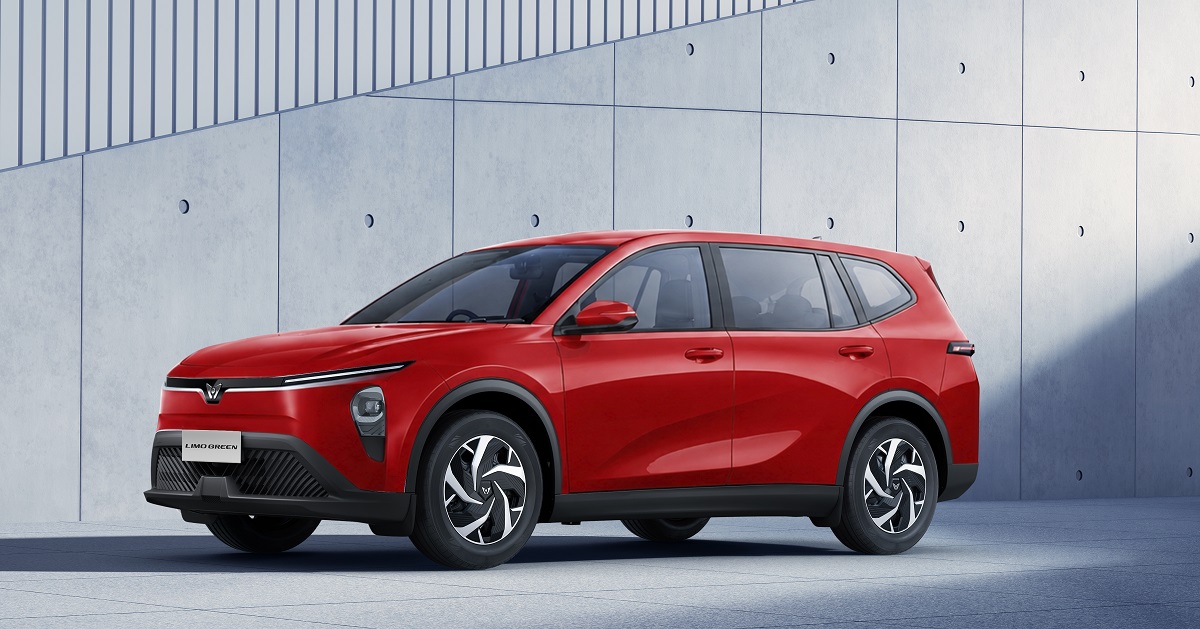 |
Vietnam’s VinFast announced a strategic partnership with NVIDIA and AI company Autobrains to develop a Level 4 robotaxi platform for Southeast Asia
One of the clearest signs of this transition arrived recently from an unexpected corner of the world. At NVIDIA GTC Taipei 2026, Vietnam’s VinFast announced a strategic partnership with NVIDIA and AI company Autobrains to develop a Level 4 robotaxi platform for Southeast Asia. Built on NVIDIA DRIVE Hyperion 10 and powered by Autobrains’ Agentic AI software, the program aims to tackle one of the world’s most challenging traffic environments while making advanced autonomous mobility more scalable and cost-effective.
Beyond the announcement itself, the deal shines a light on several big changes happening all at once, from software-defined vehicles and AI-powered mobility to new partnerships and the push to bring autonomous driving into the real world.
Software-defined vehicles are becoming the industry’s next battleground
For much of automotive history, competition revolved around engines, manufacturing efficiency and mechanical engineering. Increasingly, however, vehicles are becoming software platforms that can continuously evolve through over-the-air updates, AI-driven features and cloud connectivity.
According to IoT Analytics’ Software-defined Vehicles Adoption Report 2026, 45% of automotive OEMs and suppliers now rank software-defined vehicles (SDVs) as their top strategic priority, ahead of both autonomous driving and electrification.
This shift is particularly significant for EV manufacturers. Unlike internal combustion vehicles, EVs already rely heavily on software-controlled systems for battery management, energy optimization, thermal management and vehicle performance. In many ways, today’s EV is starting to look less like a traditional car and more like a smartphone with seats and wheels.
As vehicles become software-defined platforms, competitive advantage is increasingly determined by computing power, AI capabilities and software architecture, creating new opportunities for EV-first brands such as VinFast.
Emerging markets are becoming the next frontier for autonomous mobility
The first generation of robotaxis largely focused on cities such as Phoenix, San Francisco, Shanghai and Beijing, where infrastructure is relatively structured and regulations are more mature.
Now comes the harder test: proving autonomous driving can work reliably in dense, highly unpredictable environments filled with motorcycles, informal driving behavior, pedestrians and mixed traffic conditions.
Southeast Asia represents challenges, but also a substantial commercial opportunity. According to IMARC Group, the Southeast Asian autonomous vehicle market reached approximately US$4.6 billion in 2025 and is projected to grow to US$27.3 billion by 2034.
For VinFast, this presents an opportunity to develop autonomous driving systems tailored to the realities of emerging markets while remaining equally effective in Western urban environments. The company itself highlighted this point when announcing the partnership, describing Southeast Asia’s dense traffic, diverse road behavior and highly dynamic urban environments as a demanding validation ground for autonomous driving.
Think of it this way: teaching a robotaxi to drive on wide, orderly roads is one thing. Teaching it to handle a busy Southeast Asian intersection, where scooters seem to appear from every direction at once, is an entirely different challenge.
If autonomous systems can succeed in Southeast Asia, they may become significantly easier to deploy across many other developing markets.
The industry is moving from standalone automakers to technology ecosystems
Autonomous driving has become too complex for any single company to master alone. Successful programs increasingly combine multiple areas of expertise:
-
Automakers for vehicle integration and production
-
AI specialists for autonomous software
-
Semiconductor companies for computing platforms
-
Mapping, simulation and cloud providers for supporting infrastructure
The VinFast-NVIDIA-Autobrains collaboration reflects this growing industry model. For newer EV brands, these ecosystems offer a shortcut to innovation by allowing them to leverage world-class technology partners rather than building every capability from scratch.
The future of EV innovation is increasingly being built through strategic technology ecosystems, and VinFast is leveraging global partnerships to accelerate the development of advanced autonomous capabilities.
The robotaxi industry is moving from experimentation to commercialization
Perhaps the most important trend is that robotaxis are moving beyond experimentation and toward commercial scale.
The evidence is increasingly visible. Fully autonomous ride-hailing services are now completing hundreds of thousands of paid passengers trips every week across multiple cities, while operators continue expanding into new markets. At the same time, industry analysts project strong growth for the global robotaxi sector over the coming decade as more cities transition from pilot programs to commercial deployments.
Yet much of this progress remains concentrated in developed markets or relatively controlled operating environments. Large-scale deployment in emerging markets, where traffic patterns are more complex and less predictable, remains one of the industry’s next major challenges.
This is where VinFast’s approach stands out. By developing a Level 4 robotaxi platform specifically for Southeast Asia, the company is targeting a region that could become one of the most demanding proving grounds for autonomous mobility. And rather than positioning autonomous driving solely as a luxury technology, the company is pursuing an approach centered on broader deployment and real-world usability.
That aligns with a wider industry movement toward democratizing advanced mobility technologies and making autonomous transportation accessible to a larger population. After all, technologies tend to have the biggest impact not when they stay in premium products, but when ordinary people can use them in everyday life.